Grief, out loud — the only Wind Phone Booth in West Tennessee
Say the things
you didn’t get to say
A disconnected telephone in a quiet booth in East Memphis. Free, private, and open to anyone who has lost someone.
Have you ever caught yourself talking to someone who is no longer here?
Out loud in the car. In the kitchen at two in the morning. Standing at a graveside with your hands in your pockets, feeling faintly ridiculous.
Or the other version of it — something happens, something perfectly ordinary, and for half a second your first thought is that you have to tell them. The job came through. The scan was clear. One of the kids said something they would have loved. You have picked up your phone before you remember there is nobody to call.
Most people who have lost someone know both of those moments. Most have also wondered, quietly and without ever asking anyone, whether it was a strange thing to be doing.
It isn’t. And there is now a place in East Memphis built for exactly that.
A generous gift to Memphis
The Wind Phone Booth is a gift from
The McKinney Family Foundation
Their gift is why it costs nothing to use, and why it is open to anyone who needs it.
So, what exactly is a Wind Phone Booth?
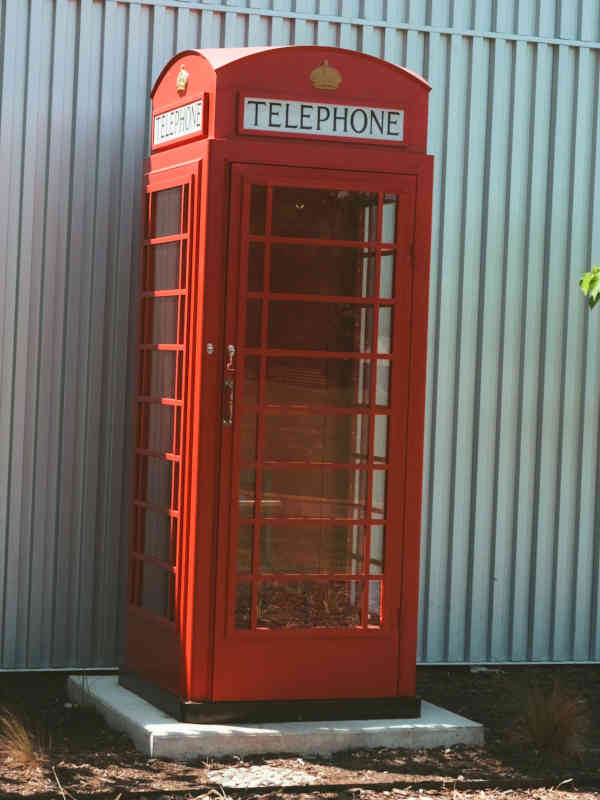
A Wind Phone Booth is a phone box with an old rotary telephone inside. The telephone is not connected to anything. There is no dial tone, no line, no signal.
That is the point.
You step in, you close the door, and you pick up the handset. Some people dial a number they still know by heart. Some dial the digits that spell a name, or the word LOVE. Some never dial at all. Then they talk — out loud, in a normal voice, the way you would on any other call.
What the Wind Phone Booth gives you is not a connection. It is permission, and four walls’ worth of privacy to use it.
Where to find a Wind Phone Booth near you
If you searched for a wind phone near you and landed here, this is the short version: if you are anywhere in the Mid-South, this is almost certainly the closest one to you.
Wind Phone Booths are mapped nationally by My Wind Phone, which tracks roughly 260 across the United States. They are spread unevenly. Tennessee’s others sit a long way east of us — Nashville, Clarksville, and Maryville. Arkansas and Missouri have none of their own. Mississippi has one, down in Hattiesburg, about four and a half hours south.
That leaves a wide gap across the Mid-South, and The Front Porch sits in the middle of it. Ours is the nearest Wind Phone Booth for most of:
- Memphis and Shelby County — Germantown, Collierville, Bartlett, Cordova
- Eastern Arkansas — West Memphis, Marion, Forrest City, Jonesboro
- North Mississippi — Southaven, Olive Branch, Hernando, Senatobia, Oxford
- Southeast Missouri and the Missouri Bootheel
Visiting the Wind Phone Booth
The booth sits on The Front Porch campus, near the corner of Walnut Grove and Perkins in East Memphis.
- Free
- No fee, no donation expected
- No booking
- No appointment, no sign-in
- No limit
- Stay as long as you need
- Open to all
- Any loss, any time since
Before or after
Many people visit on their way in or out of a counseling appointment, or pair it with a coffee on the porch. Some just come, use the Wind Phone Booth, and go. Our café is open Monday 7:30 AM to 1:30 PM and Tuesday through Friday 7:30 AM to 5:30 PM, so there is somewhere warm to sit afterward if you would rather not drive straight home.

Why the Wind Phone Booth helps
For most of the last century, grief advice pointed in one direction: find closure, let go, move on. Anyone who has actually lost someone knows how badly that advice fits.
Bereavement research has since moved on from it too. The dominant framework now is called continuing bonds — the finding that maintaining an ongoing relationship with the person who died is a normal, healthy part of grieving, not a failure to complete it. Studies associate strong continuing bonds with fewer symptoms of depression, anxiety, and prolonged grief.
There is a longer history here too. Speaking to someone rather than about them is an established technique in grief work, going back to the empty-chair exercises of Gestalt therapy. The Wind Phone Booth is the same idea with better acoustics.
Put plainly: talking to someone you have lost is not an odd thing that odd people do. It is something grief therapists actively encourage. The Wind Phone Booth simply gives that instinct a room, a door, and a reason to take your time.
Why people come to the Wind Phone Booth
There is no threshold you have to clear, and there is no script. That is the question almost everyone asks first — what am I supposed to say? — and the honest answer is that nobody will tell you.
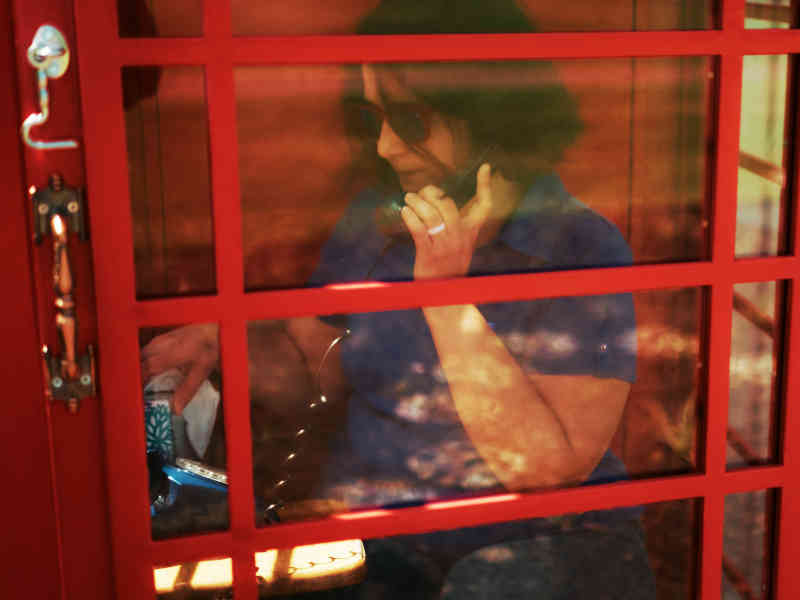
Some people arrive with a speech and say something else entirely. Some say the enormous things — I miss you. I’m still angry with you. I never told you what that meant to me. Some say the small ones, which are often harder: the job came through, the tooth came out, the house sold, we’re all right. Some pick up the handset, say nothing at all, and stand there until they are ready to leave. That counts too. Silence in that booth is not a wasted visit.
You do not need to know what you want to say before you go in. That is what the door is for.
People often want to know whether their particular situation counts, so here are some of the reasons people use a Wind Phone Booth. If you recognize yourself anywhere in this, that is reason enough.
When there was no warning
A heart attack at fifty-two. A car on a wet road. An overdose. A call at four in the morning from a number you didn’t recognize.
Sudden loss takes the conversation away mid-sentence. There was no bedside, no final week, no chance to put anything in order. People come to say the thing that was still queued up behind an ordinary Tuesday.
When you had time, and still didn’t say it
This one catches people off guard. You can sit beside someone for six weeks and still not say it.
Sometimes you keep things light because you don’t want to frighten them. Sometimes the medication got there first, or the dementia did, and the person was gone a long while before the death was. Sometimes you were busy being the competent one — managing the prescriptions, the relatives, the paperwork — and no moment ever felt like the right one.
And afterwards there is often relief, which almost nobody admits to out loud, and the guilt that arrives directly behind it.
When the relationship was complicated
You might be grieving a parent you hadn’t spoken to in nine years. Someone who hurt you, and whom you loved anyway. Someone you were furious with when they died and are still furious with now. A falling-out that both of you assumed there was time to repair.
Anger is allowed in the Wind Phone Booth.
When nobody treats it as a real loss
There is a name for this. Grief researchers call it disenfranchised grief — grief that isn’t openly acknowledged, publicly mourned, or socially supported. It is grief with no role at the funeral and no sympathy cards.
- An ex-husband or ex-wife, where friends don’t quite see why it has hit you this hard
- A pet — for a lot of people, the closest daily relationship they had
- A miscarriage, a stillbirth, an infant loss; grief with almost no shared vocabulary around it
- A friend or a colleague you loved more than anyone near you understood
- A relationship other people didn’t know about
- Someone lost to addiction or suicide, where the sympathy arrived with an asterisk attached
If your loss came without a casserole and a week off work, the Wind Phone Booth does not know the difference.
When there is news they should have heard first
Grief is not only about the death. A great deal of it is the ongoing business of living without them.
The engagement. The baby, who has their nose. The job, the house, the diagnosis. Finally leaving. Finally telling the truth about something. The grandchild they missed by four months.
People come here to deliver good news at least as often as bad.
When the date comes round
Birthdays. The anniversary. The first Christmas, which is its own particular animal. Mother’s Day and Father’s Day, which are unavoidable for about three weeks each. The year they would have turned sixty.
Grief attaches itself to dates and gets louder as they approach. A lot of visits happen in the week beforehand rather than on the day itself.
When you just want to say their name out loud
Sometimes there is no occasion at all. People stop saying the name after a while — carefully, kindly, meaning to spare you — and the quiet starts to feel like a second loss.
You are allowed to come and say it.
If you had never heard of any of this before today
Most people haven’t. Around two thirds of grieving Americans never speak to a professional about it, and among younger adults who say they would want grief support, only about half know what is actually available to them. That gap is the reason this page is as long as it is.
You do not need a diagnosis, a referral, a religion, or even a word for what you are feeling. You need somewhere to stand and something to say.
“Because my thoughts couldn’t be relayed over a phone line, I wanted them carried on the wind.”
Itaru Sasaki, who built the first Wind Phone Booth in his garden in 2010
Where the Wind Phone Booth came from
In 2010, a garden designer named Itaru Sasaki lost his cousin. Sasaki lived in Ōtsuchi, a coastal town in northern Japan, and he could not find a way to carry on the conversation they had not finished. So he put a glass phone box in his garden and installed a disconnected rotary phone in it.
His reasoning was simple. His words could not travel down a wire, so he would let the wind carry them instead. He called it kaze no denwa — the telephone of the wind.
The following year, the 2011 earthquake and tsunami struck the northeast coast of Japan. Ōtsuchi was among the towns hit hardest, losing roughly a tenth of its population in a single afternoon. Sasaki opened his garden to his neighbors.
More than 30,000 people have since made that trip. The idea has spread to hundreds of Wind Phone Booths worldwide — in parks, on trails, in gardens, on hospital grounds — each one an ordinary telephone that does not work, sitting somewhere quiet.
Ours is the only one in West Tennessee, and it is here because **The McKinney Family Foundation** gave it to the city.
Grief support on the same campus
The Wind Phone Booth is not a substitute for support, and we would not pretend otherwise. It sits a short walk from people who do this professionally.
The Front Porch is the permanent home of Milla’s House, a location of the Baptist Centers for Good Grief. Milla’s House is named in memory of Milla Gieselmann, a six-year-old whose family faced profound loss through Batten disease and found support at the Grief Center. It offers free grief counseling to children, teens, and adults.
If you would like to talk to someone, email info@tfpmemphis.org or call (901) 695-2513. If you would rather not talk to anyone at all, the Wind Phone Booth is out there, and it is open.
Common questions
The questions people search for at two in the morning, and the practical ones about visiting. You do not have to have heard of a Wind Phone Booth for any of this to apply to you. For anything clinical, the counselors at Milla’s House on this campus are the people to ask — and it is free.
Is it normal to talk to someone who has died?
Yes, and it is far more common than most people realize. Therapists do not generally treat it as a problem at all — almost everyone does it. The difference is that most people keep it to themselves, which is why it can feel like something only you do.
Why do I still talk to them out loud?
Because saying something out loud does something that thinking it does not. Grief researchers call the ongoing relationship people keep with someone who died continuing bonds, and current bereavement research treats it as a healthy part of grieving rather than a failure to move on.
Why do I keep reaching for my phone to call them?
Because you spent years with them as the person you told things to, and that habit outlives the person. Good news is often worse than bad for this — the reflex to share it arrives before the memory catches up.
What do I do if I did not get to say goodbye?
Regret is one of the most stubborn parts of grief, and a sudden death takes the conversation away mid-sentence. There is no way to have the goodbye you did not get, but a great many people find that saying the thing out loud — once, properly, somewhere private — does more than they expected. That is what the Wind Phone Booth is for.
Is it normal to be angry at someone who died?
Yes, and it is more common than people admit. Anger at the person, at yourself, at doctors, at whoever was driving. It does not mean you loved them less. Anger is one of the more common things said aloud in a Wind Phone Booth.
Is it normal to feel relieved when someone dies?
Yes, particularly after a long illness or a long stretch of caregiving. Relief and grief sit together far more often than anyone says out loud, and the guilt that follows the relief is its own weight. Neither means you are cold.
Why does grief hit harder around birthdays and holidays?
Grief attaches itself to dates. Birthdays, anniversaries, the first Christmas, Mother’s Day and Father’s Day all mark an absence in a way ordinary days do not. Many people find the week before is worse than the day itself.
Why does nobody seem to treat my loss as a real one?
There is a name for this: disenfranchised grief. It is grief that is not openly acknowledged or socially supported — an ex-partner, a pet, a colleague, a pregnancy loss, a relationship other people did not know about, or a death by suicide or addiction where the sympathy arrived with an asterisk. The grief is no smaller. It just comes without the casserole and the week off work.
Is it normal to grieve a pet as much as a person?
Yes. For many people a pet was the closest daily relationship they had — the one who was there every single day. Pet loss is one of the most commonly dismissed forms of grief, and one of the most keenly felt.
What is a Wind Phone Booth, and how does it help with grief?
A Wind Phone Booth is a telephone that is not connected to anything, in a booth in a quiet place, where you can speak aloud to someone who has died. It helps because saying something out loud does what thinking it does not — and because it gives a private room to an instinct most people otherwise act on alone in the car.
Can a Wind Phone Booth really help someone who is grieving?
It is not therapy and it is not a substitute for it. What it offers is a place to say the unsaid thing without an audience, which grief researchers and counselors both recognize as useful. Many people pair a visit with the free counseling available on this campus at Milla’s House.
Where can I go to talk to someone I have lost?
The Wind Phone Booth at The Front Porch, 4688 Walnut Grove Road in East Memphis, is open to anyone, free, with no appointment. It is the only one in West Tennessee and the nearest for most of eastern Arkansas, north Mississippi and southeast Missouri.
What is a Wind Phone Booth?
A Wind Phone Booth is a disconnected telephone, usually in a booth in a quiet setting, where people can speak aloud to someone who has died. The telephone is not connected to any line. The practice began in Ōtsuchi, Japan, in 2010 and has since spread to hundreds of locations worldwide.
Where is the closest Wind Phone Booth to Memphis?
The Wind Phone Booth at The Front Porch, 4688 Walnut Grove Road in East Memphis. It is the only one in West Tennessee, and the nearest one for most of eastern Arkansas, north Mississippi and southeast Missouri.
Is there a Wind Phone Booth in Arkansas or Mississippi?
Arkansas has none. Mississippi has one, in Hattiesburg, in the south of the state. For eastern Arkansas and north Mississippi, the Wind Phone Booth at The Front Porch is the closest.
Does it cost anything to use?
No. There is no charge, no booking and no donation expected.
Do I need to make an appointment?
No. There is no appointment, no sign-in and nobody to check in with. You can simply arrive.
How long can I stay?
As long as you want. There is no time limit and nobody monitoring the booth.
What am I supposed to say?
There is no script and no right answer. People say what they miss, what they regret, what they never got to finish, or ordinary news about their week. Many say nothing at all and simply stand there. Every version of that visit counts.
Do I have to dial a number?
No. Some people dial a number they still know by heart, some dial the digits that spell a name or the word LOVE, and some never dial at all. The telephone is not connected either way — the dialling is for you, not for the line.
Can people see or hear me?
The booth has glass panes, so from outside you are visible as a shape rather than a face — near enough to feel safe, far enough to feel private. It is a real door that closes, and people passing give it a wide berth.
Can I go with someone else?
Yes. Some people bring a friend or a family member who waits nearby, and some go in together. There is no rule that says you have to do this alone.
What if I cry?
Then you cry. That is an entirely expected thing to happen in a booth built for this, and the café is a short walk away if you would rather sit down for a while before driving home.
Can I use it if my loss was years ago?
Yes. There is no time limit on grief and no point at which it becomes too late. People visit decades after a death, often when a birthday, an anniversary or a piece of news brings it back to the surface.
Can I use it for a pet?
Yes. The Wind Phone Booth does not distinguish between the losses that come with a funeral and the ones that do not.
Can children use the Wind Phone Booth?
Yes. Wind phones are widely used by grieving children, usually with a parent or caregiver nearby. Free grief counseling for children and teens is available on the same campus through Milla’s House.
Is it religious?
No. The Wind Phone Booth carries no religious requirement and asks you to believe nothing in particular. People of every faith and none use them.
Where can I get free grief counseling in Memphis?
On this campus. The Front Porch is the home of Milla’s House, a location of the Baptist Centers for Good Grief, which provides free grief counseling for children, teens and adults. Email info@tfpmemphis.org or call (901) 695-2513.